
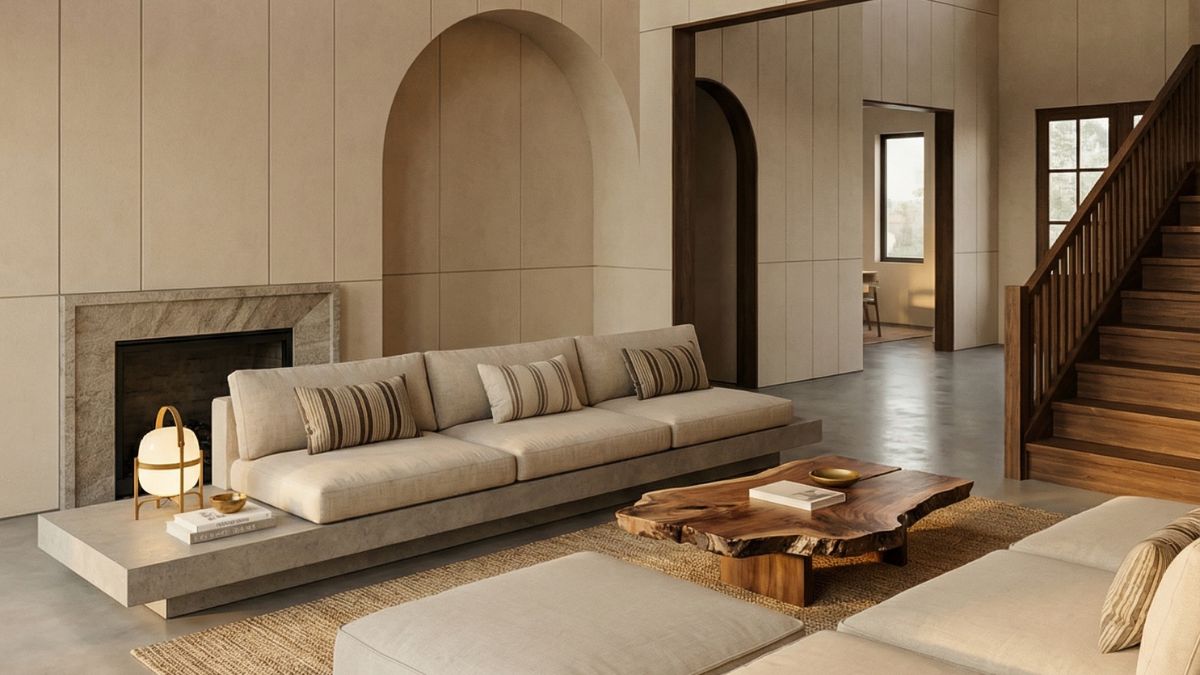
Interior designers who present polished AI renders at the first client meeting are closing projects before competitors even send a proposal. The gap between winning and losing a brief often comes down to one thing: how clearly a client can visualise the end result. AI-generated photorealistic renders have become the sharpest tool in a designer's pitch arsenal.
The Client Confidence Problem
Most interior design clients are not trained to read mood boards, material samples, or AutoCAD floor plans. They nod along in meetings but leave uncertain — and uncertainty kills decisions. When a client cannot clearly picture the finished space, they delay sign-off, request endless revisions, or walk away entirely.
AI photorealistic renders eliminate that uncertainty at the earliest stage. Showing a client a near-photographic image of their future living room, hotel lobby, or retail interior — before a single wall is touched — shifts the conversation from abstract to concrete. Hesitation turns into enthusiasm, and enthusiasm accelerates sign-off.
How Designers Are Using Renders to Win Pitches
Leading interior designers are embedding AI renders directly into initial proposals rather than waiting until the concept development phase. Presenting a high-quality visual on day one signals competence, preparation, and creative vision simultaneously. It tells the client you have already thought through their space in detail — and it makes your quote feel like a certainty, not a risk.
Beyond pitches, renders serve as a precise briefing tool for contractors, a content asset for social media, and a reference point that keeps projects on scope. Designers who deliver renders early report fewer mid-project disputes because the visual contract is established upfront. The render becomes the single source of truth for everyone involved.
Why the 48-Hour Turnaround Changes the Equation
Traditional architectural visualisation studios operate on timelines of one to three weeks and charge fees that only make sense for large-scale developments. That model excludes the majority of interior design projects where speed and cost efficiency are critical. AI-assisted rendering has collapsed both barriers — Loop Strategy AI delivers photorealistic visuals in 48 hours from €490, making professional renders viable for residential refurbishments, boutique commercial fit-outs, and competitive pitches at any scale.
For interior designers, this means you can receive a client brief on Monday, present a fully rendered concept on Wednesday, and secure sign-off before the week is out. That velocity is a competitive advantage that compounds over time: more pitches presented, more projects won, and a portfolio of high-quality visuals that continues to attract new enquiries.
What to Look for in an AI Render Partner
Not all AI render services produce results appropriate for professional client presentations. The quality benchmark is photorealism — lighting that reads as natural, materials with convincing texture and depth, spatial proportions that match the actual floor plan, and styling that reflects the designer's intended aesthetic rather than generic stock-image interiors. Renders that fall short of this standard can actively undermine a pitch by making the concept look unserious.
Loop Strategy AI, led by Fanny, works directly with interior designers, architects, property developers, and marketing agencies to produce renders that meet the expectations of sophisticated clients. The process is straightforward: share your project brief and reference materials via WhatsApp, and receive production-ready visuals within 48 hours.