
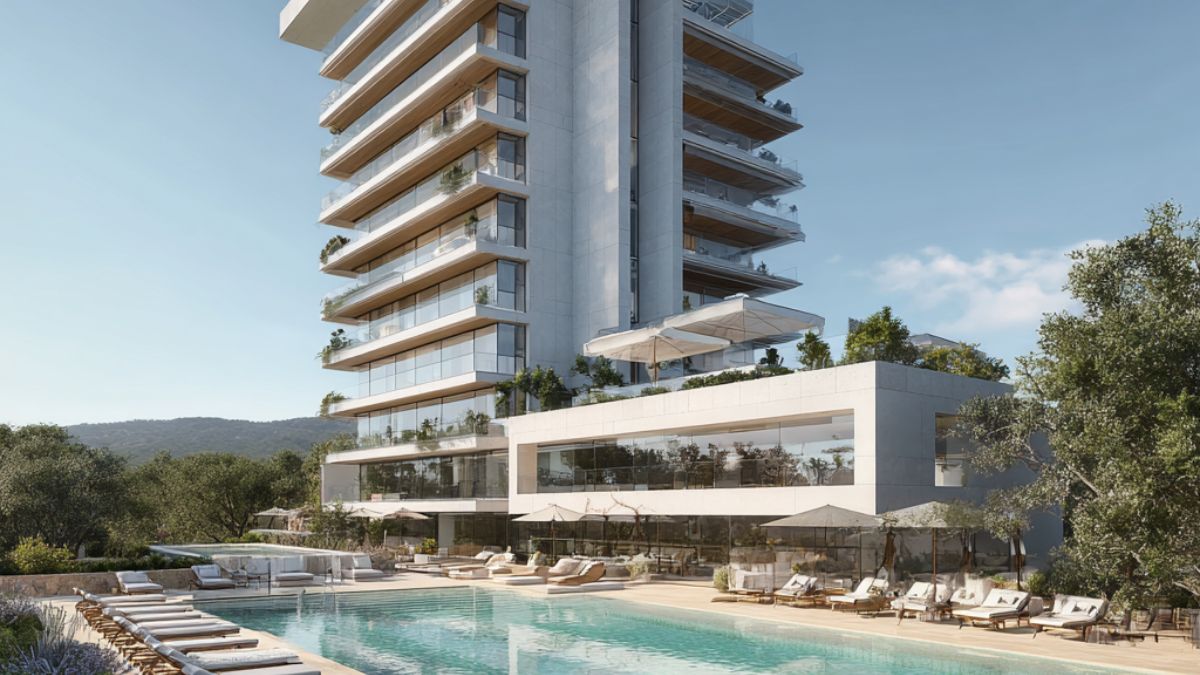
Before a single foundation is poured, the most competitive developers are already closing sales, securing planning permission, and aligning stakeholders — all using photorealistic AI renders. The gap between developers who use pre-construction visuals strategically and those who don't is widening fast. Here are five ways the smart money is using AI renders right now.
1. Launching Off-Plan Sales Before Breaking Ground
Waiting until construction is underway to start marketing is a costly habit. Developers using AI renders can launch off-plan campaigns with fully photorealistic visuals — exterior facades, interior living spaces, amenity areas — months before groundwork begins. This compresses the sales cycle and generates committed buyers or tenants while build costs are still being negotiated.
The quality threshold for these renders has shifted dramatically. AI-generated visuals now match and often exceed the output of traditional CGI studios, at a fraction of the cost and timeline. A developer can present a scheme to buyers with the same confidence as showing a finished unit.
2. Supporting Planning Applications With Contextual Visuals
Planning committees respond to what they can see. Photorealistic renders that place a proposed development accurately within its streetscape, showing materiality, scale, and shadow, reduce the ambiguity that leads to objections or revision requests. AI renders can be produced quickly enough to respond to committee feedback within days rather than weeks, keeping applications on schedule.
3. Aligning Investors and Joint Venture Partners Early
Raising capital or structuring a JV is significantly easier when partners can visualise the finished asset. Architectural drawings and floorplans communicate to technical audiences; photorealistic renders communicate to everyone else in the room, including the financial decision-makers who control the cheque.
Developers consistently report shorter investment conversations when high-quality visuals are part of the deck. The render does the work of translating vision into confidence before a single number is stress-tested.
4. Testing Design Variants Without Costly Revisions
Should the facade be brick or timber cladding? Does the lobby read better with polished concrete or warm oak? These decisions, made late in construction, are expensive. Made early with AI renders, they cost almost nothing. Developers are now running visual A/B tests on materials, layouts, and colour palettes at the concept stage, getting sign-off from end-users or marketing teams before the specification is locked.
This approach also reduces friction with architects and interior designers. A shared visual reference eliminates the interpretation gap between a written brief and a built outcome.
5. Building Marketing Assets That Work Across Every Channel
A single photorealistic render produced before construction can populate a project website, paid social campaigns, printed brochures, hoarding graphics, and press releases simultaneously. Developers who commission renders early effectively front-load their marketing asset library, so when the sales campaign launches, the creative infrastructure is already in place.
With AI rendering delivered in 48 hours from €490, the economics make this a viable strategy even for smaller schemes. The cost of not having compelling visuals — slower sales, weaker investor interest, avoidable planning delays — consistently exceeds the cost of producing them.