
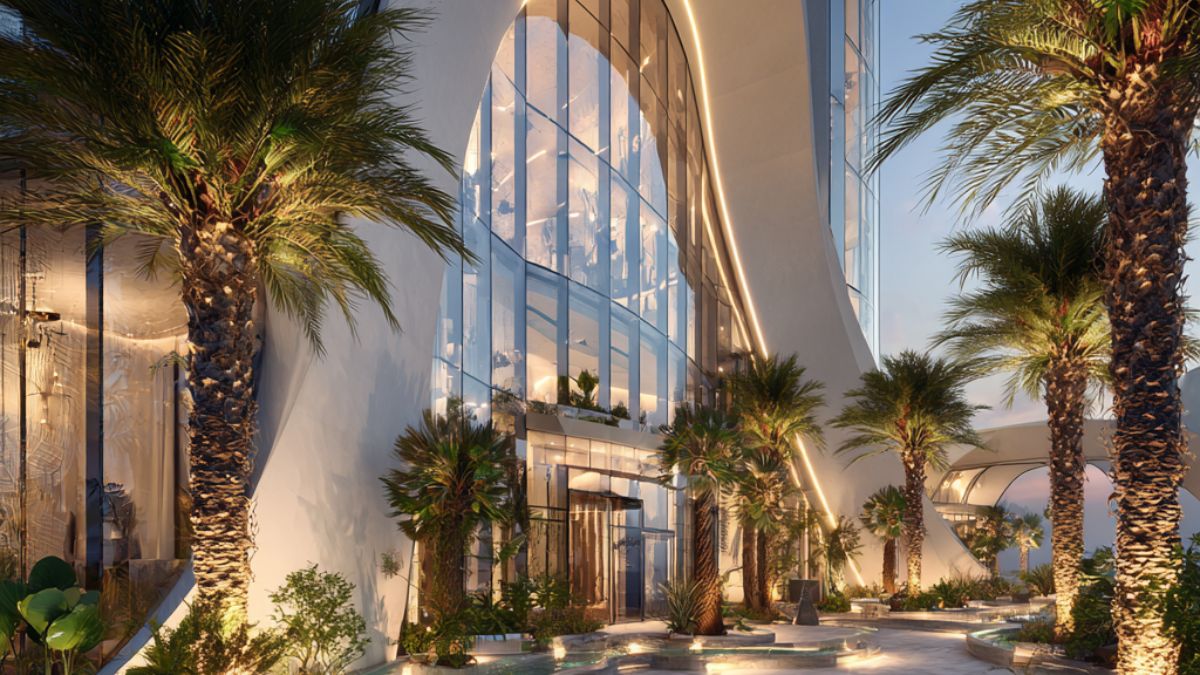
Most developers assume they need a full set of CAD drawings before commissioning a render. They don't. At Loop Strategy AI, we produce photorealistic property visuals from mood boards, site photos, sketch plans, and even a well-written brief — delivered in 48 hours from €490.
What We Actually Need to Start
Technical drawings accelerate precision work, but they are not the entry point. What matters most is communicating the feeling, scale, and purpose of the space. A rough floor plan sketched on paper, a site photograph, a reference image you saved from a property magazine — these are all legitimate starting points. The brief is about intent, not documentation.
At minimum, we need to understand three things: what the space is (apartment, commercial lobby, garden terrace), how it should feel (warm and residential, clean and minimal, high-end and dramatic), and who the end audience is (buyers, tenants, planning committee, investors). Everything else can be resolved in a short back-and-forth before we begin.
How to Describe Style Without Jargon
Reference images are more reliable than adjectives. 'Modern' means different things to a Scandinavian minimalist and a Miami developer. Instead of describing a style, pull three to five images from Dezeen, Houzz, or Instagram that represent the aesthetic direction you want. If you have brand guidelines, a project palette, or a competitor development you admire, share those too. Visual references eliminate ambiguity faster than any written specification.
Capturing Light and Time of Day
Lighting is where renders succeed or fail commercially. Specify whether you need a golden-hour exterior, a bright daytime interior, or a lit evening shot for a hospitality setting. If you're targeting a marketing brochure, natural daylight with warm accents typically performs best. For planning submissions, neutral midday light reads as more objective and credible. If you're unsure, tell us the context — we'll advise on what has worked for comparable projects.
Also consider orientation. If the property faces west and the living room benefits from afternoon sun, that detail transforms a generic render into a selling point. You don't need a compass bearing — 'the main terrace gets the evening light' is enough for us to make deliberate choices about shadow angle and sky tone.
Furniture, Finishes, and Fixtures
You do not need a specified FF&E schedule. If you have selected specific products — a particular sofa range, a tile finish, a kitchen manufacturer — share links or images and we will match them. If you haven't, tell us the target market and price point, and we will populate the scene with appropriate, aspirational pieces that reinforce the property's positioning. A first-time buyer development in Dublin and a luxury penthouse in Lisbon require entirely different staging logic, and we apply that without being prompted.
For finishes, even approximate descriptions work: 'light oak flooring, white walls, brushed brass hardware' gives us enough to build a coherent material palette. If you are still deciding between options, we can produce variants — a warm palette versus a cool palette, for example — so you can make the decision with visual evidence rather than swatches alone.
The Brief Format That Works Best
There is no required template. The fastest briefs we receive are a WhatsApp message with four or five reference images, a voice note explaining the project, and a photo of whatever floor plan or site layout exists. From that, Fanny will confirm the scope, clarify any open questions in a single exchange, and have a first render ready within 48 hours. Formal documents and lengthy email threads are not a prerequisite — clear intent is.