The CGI industry is mid-disruption, and most studios are not being straight with you about it. AI-assisted rendering has matured to the point where the output is photorealistic, the turnaround is measured in hours not weeks, and the price difference is significant. Here is an honest breakdown of what each approach actually delivers — and where the trade-offs lie.
What Traditional CGI Does Well
Traditional CGI — built in software like 3ds Max, Cinema 4D, or Lumion from architect-supplied models — remains the gold standard for one specific use case: complete geometric precision. When a developer needs renders that contractually mirror exact specifications, or when a local planning authority requires pixel-accurate compliance with submitted drawings, a model-based pipeline is the defensible choice. Every wall thickness, setback, and material spec is locked to the technical drawings.
The cost of that precision is well documented. A professional CGI studio typically charges between €800 and €3,000 per image, with a production timeline of two to four weeks depending on complexity and revision cycles. For large-scale masterplans or landmark architecture projects with significant marketing budgets, that investment is justifiable. For the majority of mid-market residential and commercial schemes, it is disproportionate to the output required.
Where AI Rendering Changes the Equation
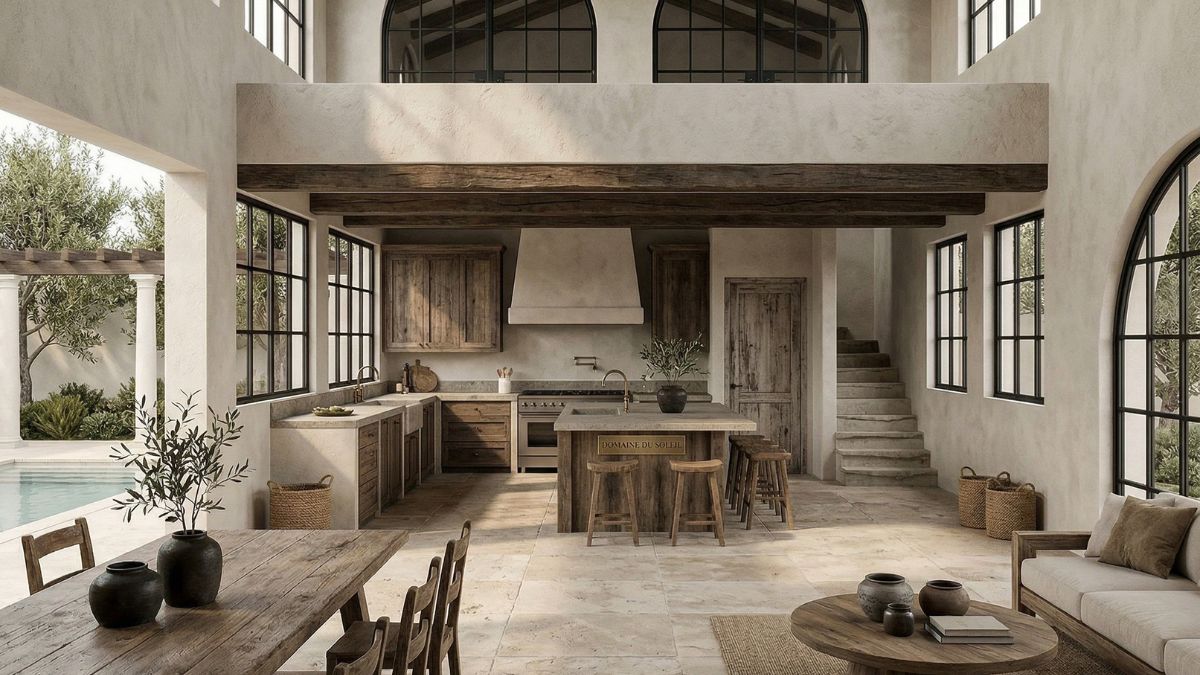
AI-assisted rendering does not replace technical modelling — it replaces the bottleneck. Working from reference images, mood boards, floor plans, and creative briefs, a skilled AI studio can produce photorealistic visuals that are indistinguishable from traditional CGI in a marketing context. The output quality for lighting, material texture, atmosphere, and spatial storytelling is now genuinely equivalent. What changes is the speed and cost structure: 48-hour delivery at a fraction of the price is not a compromise, it is a different production model entirely.
The honest limitation is this: AI renders are optimised for persuasion, not specification. They communicate the vision, the feel, and the lifestyle proposition of a space with exceptional clarity. They are the right tool for marketing launches, investor decks, social media campaigns, planning pre-applications, and early-stage client presentations. They are not the right tool when a render needs to function as a technical compliance document. Knowing which deliverable you actually need is the real decision.
The Practical Decision Framework
For property developers and marketing agencies, the question is almost never 'which is better' — it is 'which is appropriate for this stage of the project.' Pre-sales campaigns, launch materials, and agent toolkits do not require engineering-grade accuracy. They require imagery that sells. AI rendering delivers that faster and cheaper, which means more budget for media spend, more visual variety across platforms, and faster iteration when the brief evolves.
Architects and interior designers increasingly use AI renders for early design validation and client sign-off before committing to a full CGI production run. The ability to test multiple schemes, material palettes, or lighting scenarios within a 48-hour window — at under €200 per image — changes how design conversations happen. Loop Strategy AI was built specifically for this intersection: professional-grade output, without the traditional studio overhead.